

Nawl Threads: Handwoven Heritage Bags
Nawl Threads: Handwoven Heritage Bags
By Laura Taleb
In Clothing & Accessories
Couldn't load pickup availability
Stock level: 1 left
Item details:
▸ Features: Handmade Unique Piece▸ Materials: Cotton Linen Metal Mix
▸ Art technique: Weaving
▸ Net Weight (kg): 0.4
Discover a collection of handmade bags crafted with the traditional nawl weaving technique, using a wooden handloom to interlace colours, textures, and stories. Rooted in Phoenician-era craftsmanship, each piece blends ancestral know-how with contemporary design in Lebanon.


About Laura Taleb
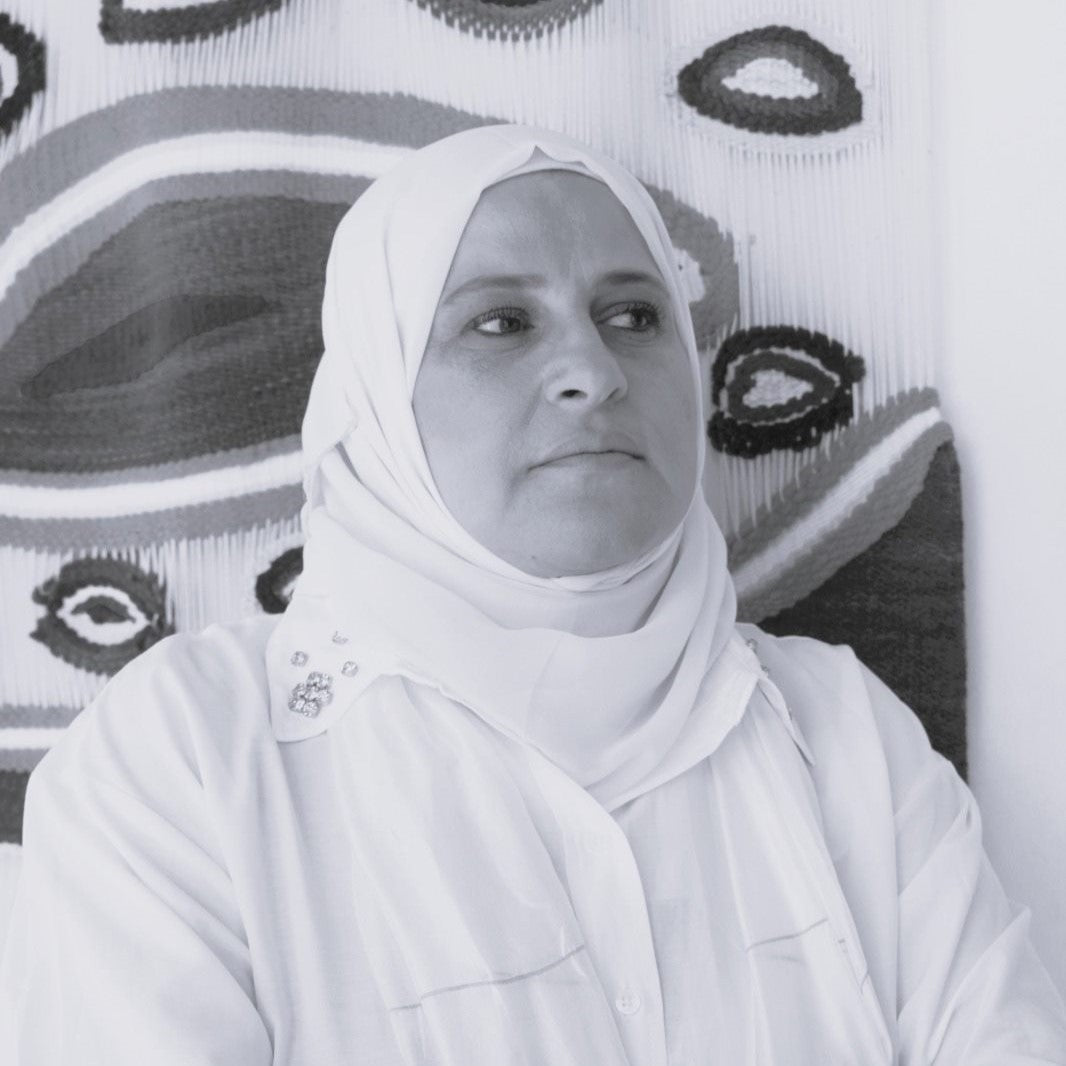
Laura Taleb is a textile and visual artist from Lebanon. She mastered carpet weaving from a young age, and at nineteen, she learned to weave handmade kilims (oriental rugs). She later became a trainer in kilim weaving, approaching it from both an aesthetic and technical perspective. It became a deep passion for her, as she explored the symbols, ideas, and techniques embedded within the craft. In addition to her love for weaving, she had a strong appreciation for all forms of art, which led her to join the College of Fine Arts. She continued her studies to obtain a master’s degree, where she presented research on kilims that combined their functional role with their creative aesthetic.
In terms of the origins of the kilim and its symbolic and functional significance, it is considered one of the oldest crafts developed by humanity—initially used for covering the body before evolving into decorative art. The word "textile" comes from the Latin texere, meaning weaving or knitting. A textile consists of a thread or a group of threads intertwined to form a fabric. The weaving process begins with the warp threads, known as "Seda," which are stretched between two beams, either vertical or horizontal, on a loom called "Noell." The weft threads, called "Lehma," are then interwoven with the warp threads, resulting in the final fabric. Kilims are distinguished by their symbolic and expressive designs, which help define their identity, alongside the diverse techniques used in their creation.
She was particularly drawn to the presence of ancient carpets in museums and galleries, where visitors admired them as works of art. This connection between weaving and visual art inspired her to develop an open artistic philosophy—one that embraces challenges, breaks boundaries, and frees the mind to create a new form of art rooted in heritage and culture.
Her ability to weave, combined with her love for fine art, allowed her to reinterpret heritage through a contemporary lens. Her textile artworks began to express spiritual emotions and sensations, which she translated into thread, creating contemporary artistic pieces inspired by traditional civilizations and cultures. She likened the threads to a painter’s brush, where colors and materials became her medium. The warp threads formed the base, much like a canvas, while her compositions integrated kilim weaving with painting techniques. In this way, weaving and thread became her primary sources of inspiration, enabling her to create tapestry artworks and contemporary textile hangings that bridge the past and the present.